
It’s that time of the year when reading challenges are popping up on lots of blogs. There are so many great ones and I especially love the emphasis I’m seeing on underrepresented voices. As someone who’s gotten more serious about my writing in the last year, I’ve realized that this means getting more serious about reading.
As a kid, I’d sometimes go through a book a day– Goosebumps or Babysitter’s Club. In high school, I devoured my English class reading lists, always reading ahead of the class in 1984 or 100 Years of Solitude. Though I continued to read after graduation, the demands of college, then grad school, then parenthood slowed my pace waaaay down. Now I’ve been intetionally kicking it back into gear. If you’re a writer who, like me, wants to read to improve their writing, I’ve created this challenge for YOU– I hope it encourages you to push your limits with reading in a way that maximizes your efforts and deepens your involvement in the writing community!

- Beta read for another writer
This will be more than worth the effort when you have a beta reader for your own book. It’s also incredibly helpful to see books in their unpolished form. Plus, won’t it be cool to be on someone’s acknowledgments page? - Craft book
My favorite is Bird by Bird by Anne Lamott. - Reread a book that inspired you to become a writer
- A “bad” book
Don’t spend a lot of time on this one, but it can be nice to both give your brain a break and remind yourself of things you don’t want to do. - A comparable title to your work in progress
- A fiction book with a similar setting
- A nonfiction book with a similar setting
- Read something out loud
This is a nice way to really slow down and absorb the language of a book. - A recent bestseller or breakout title in your genre
- A classic of your genre
Something you’re embarassed not to have read yet. Maybe the book everyone says, “Oooh, like ______?” when you tell them about your own work. - Something independently published
- The published book of a writer friend
- A book that’s been on your to-read list for a long time
Get rid of the block that’s been stopping you from reading other things! - A book by a woman of color (1)
- A book by a woman of color (2)
- A book by a woman of color (3)
Don’t skimp! I want you to read (at least!) three of them! - A book by an LGBTQ author
- A book renowned for beautiful language
- A book renowned for its social message
- Something out in 2019 that you preorder
- Something out in 2019 that you buy on publication day
- A book recommended by, or named as an influence on, a favorite author
You get an extra point for each review you write and each tweet or email you send to an author! Share your progress with #WritersReading2019 and Have fun!


 My first draft was my “vomit pass.” Touted by folks like Judd Apatow and Lena Dunham, and encouraged by the structure of marathon writing programs like NaNoWriMo, this is the idea that you just have to get the words down. They don’t have to be good. They don’t even have to make sense. You just have to suppress the urge to edit as you go and get a lot of words on the page. For Rock of Ages, this was about 50,000 words of stream of consciousness writing. I got out stories from my own life as well as some based on family stories and my dad’s poetry. It was definitely a mess, definitely not cohesive, but I still think there were some gems in it. There was emotion in it and it was honest.
 Years later I came back to this jumbled mess and decided to make something of it. I laid each of the stories out on an index card and moved them around until they were in an order that made sense. I filled things in to make a plot– a string that tied one story to the another. At this point I was pretty convinced I was a genius. When I read authors talk about how bad their early drafts were, I thought I was one of those rare writers with extraordinary natural talent. This book would be a classic, I thought, and I’d already done most of the work on it.
 Now sufficiently confident, I sent my book out to some beta readers, who responded well. Bolstered by their approval, after another long break (to have some babies), I started doing some line editing. I changed sentences to make them read better and fixed some spelling mistakes. This round was easier, but much less exciting. This is the draft I sent to Inkshares.
 So now I’m back to step two again– improving the vomit draft. I’m switching from first to third person. I’m overwhelmed by this huge task, but not upset about it. I needed to use first person to get into my characters’ heads and write them authentically and now I need to use third person to improve the prose. I’ll be working on my descriptions, on making them even more authentic for their time periods. I’ll be working to make my book very literary– not just the meanings of the words but the words themselves, their sounds, will invoke the feelings I want to convey. I’m taking it all to another level.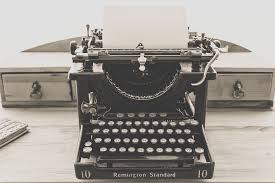
 There’s also a difference in that the act of writing is how we practice and get better. Focusing on a numeric goal can be a good way to just get some words on the page and get out of your head about getting them perfect. The word count goal of NaNoWriMo is what motivated me to write my first draft! So there’s definitely something to be said for getting your words in.
 Unless you are able to devote the bulk of your day to your craft, it’s important not to compare your routines to people who can. If you’re whipping out 500- 1,000 words a day and taking care of children or doing another job, or really, anything else, you’re doing a fantastic job! And if you aren’t, think of Tom Wolfe!


 beccaspencedobias.com