The 2019 Writer’s Reading Challenge

It’s that time of the year when reading challenges are popping up on lots of blogs. There are so many great ones and I especially love the emphasis I’m seeing on underrepresented voices. As someone who’s gotten more serious about my writing in the last year, I’ve realized that this means getting more serious about reading.

As a kid, I’d sometimes go through a book a day– Goosebumps or Babysitter’s Club. In high school, I devoured my English class reading lists, always reading ahead of the class in 1984 or 100 Years  of Solitude.  Though I continued to read after graduation, the demands of college, then grad school, then parenthood slowed my pace waaaay down. Now I’ve been intetionally kicking it back into gear. If you’re a writer who, like me, wants to read to improve their writing, I’ve created this challenge for YOU– I hope it encourages you to push your limits with reading in a way that maximizes your efforts and deepens your involvement in the writing community!

  1. Beta read for another writer
    This will be more than worth the effort when you have a beta reader for your own book. It’s also incredibly helpful to see books in their unpolished form. Plus, won’t it be cool to be on someone’s acknowledgments page?
  2. Craft book
    My favorite is Bird by Bird by Anne Lamott.
  3. Reread a book that inspired you to become a writer
  4. A “bad” book
    Don’t spend a lot of time on this one, but it can be nice to both give your brain a break and remind yourself of things you don’t want to do.
  5. A comparable title to your work in progress
  6. A fiction book with a similar setting
  7. A nonfiction book with a similar setting
  8. Read something out loud
    This is a nice way to really slow down and absorb the language of a book.
  9. A recent bestseller or breakout title in your genre
  10. A classic of your genre
    Something you’re embarassed not to have read yet. Maybe the book everyone says, “Oooh, like ______?” when you tell them about your own work.
  11. Something independently published
  12. The published book of a writer friend
  13. A book that’s been on your to-read list for a long time
    Get rid of the block that’s been stopping you from reading other things!
  14. A book by a woman of color (1)
  15. A book by a woman of color (2)
  16. A book by a woman of color (3)
    Don’t skimp! I want you to read (at least!) three of them!
  17. A book by an LGBTQ author
  18. A book renowned for beautiful language
  19. A book renowned for its social message
  20. Something out in 2019 that you preorder
  21. Something out in 2019 that you buy on publication day
  22. A book recommended by, or named as an influence on, a favorite author

You get an extra point for each review you write and each tweet or email you send to an author! Share your progress with #WritersReading2019 and Have fun!


Take the Money! Graciously Accepting Payment for your Art or Creative Services

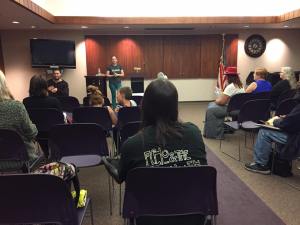
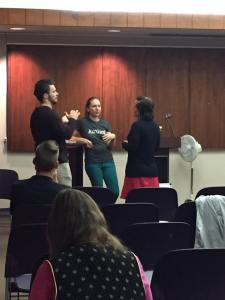
On Thursday, I spoke at a NaNoWriMo kickoff event hosted by the wonderful nonprofit, Inlandia Institute. People seemed to enjoy the workshop and I met some nice people! Afterward, I was surprised and humbled when Inlandia presented me with an honorarium. As a former board member of the organization, I guess I knew in the back of my mind that this was procedure. I just hadn’t thought it applied to me. Honorariums are for real writers, I thought. Professionals. I don’t have enough experience. I wanted to do the event. It was fun for me and a nice way to get my name out there. I didn’t think I deserved it.


I toyed with the idea of just giving the money back. It was so nice, though– I spent money on my Rock of Ages campaign, and this was a way to recoup. I won’t get any royalties for the book until after it’s published, and I won’t get any for the 750 preorders I had to get to have it published. I could definitely use the money.

Eventually I realized I should keep the money, at least a good portion of it, and I shouldn’t feel guilty about it. I’m giving 10% back to Inlandia because I so value the work they do and I want them to know that. If you are lucky enough to get something like this honorarium for sharing your creative work, here’s why you should stop feeling guilty too:

  • Accepting money for writing, or for teaching people about writing, sends the message that writing is valuable. Stories enrich our lives.
  • Writers do so much work that is not paid. As I mentioned, I put money into my crowdfunding campaign. I don’t get paid to blog or send out newsletters. I don’t get paid to write the 1000ish words a day that I usually do. Getting paid occasionally for something isn’t just payment for that workshop or story or whatever. It’s payment, and validation, for that workshop or story and all the unpaid work you do. It’s a gesture from the person or organization paying you that they value all the creative work you do and how it enriches the world.
  • Just because you like doing something does not mean you shouldn’t get paid for it. Really, we know this, but sometimes think it doesn’t apply to us. If you do something because you want to, and then you get money for it, celebrate! That’s amazing!
  • You deserve it! Thinking you don’t is just another nasty way imposter syndrome tries to talk to writers. Whoever gave you the money thinks you deserved it. Believe them!

So send a sincere letter of thanks. Be grateful and gracious. And then keep creating!


So You’re a NaNoWriMo Revision Rebel?

Though you’ve likely heard of NaNoWriMo, you may not know about NaNo Rebels. These are writers who participate in the month-long writing marathon, but don’t follow the rules. They may write essays or nonfiction instead of novels, they may set a word count other than 50,000. They may work on more than one project at once. Or they may revise instead of writing something new. Since I’m knee-deep in the edits for Rock of Ages, if I participate in NaNoWrimo this November, it will be as a rebel. I love the excitement of the month and the tools the program offers, but other than posts on the site’s forums and a few blog posts, I haven’t found tons of resources for participating as a rebel. If you’re planning to use the month to revise, read on for my plan.

Using the Word Tracker

This is the main topic of discussion amongst revision rebels. How do you translate 50,000 words into editing? People tend to do one of a few things:

  • Words processed- Count each word of your old manuscript that you go through
  • Words in the new version- Count the words in your revised work, even if some are copied and pasted or only changed a little bit. These first two are useful if you’re working on a new vomit draft.
  • Daily work- Some people aim to work on their revisions each day for the month. Each day you work, add 1667 words to your count.
  • Time- 1 hour= 500 words, 1 hour= 1000 words, 1 hour= 1667 words, etc. Since I’m trying to slow down and be more deliberate for this draft, this is likely the way I’ll go, though I haven’t decided my time to words ratio yet. A bonus to using this method is that you can count things like research toward your goal. It also leaves room to go over the same passage multiple times without hindering your word count.

Word Sprints

Word sprints are one of the most helpful tools for me when I’m aiming for quantity. These timed sprints often take place on Twitter, but you can do them with a writing friend, too! They help you circumvent your inner editor and get the words flowing. If you’re trying to summon your inner editor, though, you don’t want to suppress her. Here are some ways to harness the energy of a word sprint if you’re revising:

  • If you’re counting words processed or words in your new version, go ahead and race! You can always go back and edit your edits whe the sprint is done.
  • Use it as a focus tool. Ban yourself from looking at or doing anything else for the five, ten, or twenty minutes of the sprint. Even if you just sit there staring at your manuscript, don’t give in to distraction for the set amount of time. Maybe you’ll get something done, or maybe you’ll give your brain enough of a rest that you’ll be able to focus more afterwards.
  • Use it as a break. Give yourself the time of the sprint to work on something new or to do some stream of consciousness writing. You won’t feel guilty that you aren’t getting your revision done because, hey, it’s just a few minutes, and the excitement of writing will likely re-energize you when you return to your draft.
  • Use it for character or world building work. Use the time to write freely about a character’s arc, a scene from their childhood, or a discussion between two of your characters. Write a scene from your world that isn’t in the book. Describe how part of it looks, feels, smells, sounds, and tastes. Write one of your scenes without people. Write one from a different character’s point of view. All of this will help you shape your actual manuscript even if it doesn’t end up in the final version of your book.

Rejoice, Rebel!

Don’t feel guilty about being a revision rebel. NaNoWriMo is a tool to help with your writing. If it’s working for you, then you’re participating, even if you aren’t doing the classic 50,000 new words in 30 days. One of the best parts is the community! So gather your friends, attend a write in, enjoy the forums and the Twitter chat. Sense the buzz in the air that is the worldwide writing community feeling motivated and excited. Happy Almost NaNoWriMo!

An Editing Pep Talk

I’m writing this because I need it. The Internet is full of writing pep talks, largely due to NaNoWriMo. There are plenty of posts about just getting the words out, not thinking about quality, and suppressing your inner editor. There are inspirational diatribes about how you can worry about editing later, essays about the merits of writing for writings’ sake. But what if you’ve already got the words out? What about people in the midst of editing? What about when it’s time to wake that inner editor up?

I googled, “Editing Pep Talk” and came up with article after article about getting motivated to write. So for anyone slogging through the swamp of a major editing project, this is for you.

You’ve written a book. You’ve suppressed the urge to edit as you go. You’ve ignored the little voice inside that told you that maybe you weren’t good enough or asked what business you have trying to be a writer. You’ve put some of your deepest self on the page, some of your biggest truths, your hardest or most precious memories. This is brave. You committed enough of your time to creating that you’ve come out with this thing. A book is a big deal.

Maybe you tucked it away for a while. Maybe you’ve shown it to some people you trust. Maybe you have a publishing deal! But now you’re realizing that just getting the words out is important, but for this particular book, it isn’t enough. Writing is a revolutionary, sometimes healing act. Sometimes just the creating is enough. But sometimes you realize that what you’ve created is asking for more. It wants to be seen, read, breathed. The world wants it.

This is harder than writing. Don’t tell someone this before they’ve got the writing thing done, but the writing is the easy part. Yes, it’s brave putting yourself on paper. Looking at it again is like looking at yourself naked in the mirror after a night of drinking with the sun shining through the window right on your hungover, unwashed, puffy-eyed face.

It’s the come down after a mania. It’s realizing that maybe you aren’t as interesting, talented, or unique as you thought you were and if you want anything to come of this culmination of incredible effort that  you’ve completed you’re going to have to put in even more work.

Writing is exhilerating. You watch the page fill, your word count go up, up, up. You can work yourself into a frenzy and thrill at the speed at which the words pour out. Even when the going is slow, you’re moving forward toward a goal.

Editing is slow. It’s lonely. It’s circular. It’s endless.

But it’s necessary, and your book deserves it. There’s a community of writers in the world who have been there and they know how hard it is. For every person who thinks editing just means combing through your manuscript for typos, there’s another who has spent five days staring at the same paragraph, reworking it and reworking it until it shines. People might not see you now as you’re questioning each word, analyzing how it relates to its neighbors, but they will see you when you’re done. It will speak to them in a deeper way, flow into their hearts more smoothly, because of the work you are putting in. Each second you spend on improving your book will make it better.

Every great book has been through this process.

None of this is in vain. You won’t be satisfied by mediocrity and because of that, you will emerge with a masterpiece. You might have to hibernate. If you are used to word sprints and  virtual high fives, you may feel like you are going through something of a detox. You might need to hide away, envelop yourself in your closet or office, create a bubble around yourself and your book. You are about to get intimate and rushing through it won’t be helpful. Hunker down and read closely. Read fantastic books and take notes. Be hard on yourself. Let any feedback you’ve received be hard on you too. Take it in and make it useful. This isn’t about getting through something. This is about working and working until it’s right.

And you will. Because you’ve committed to it. You’ve committed to this book and to yourself. Your book will be best it can possibly be and you’ll always know it’s because of the work you’re putting in now.

What’s In a Word Count?

Writers I know tend to obsess about their word counts– daily, weekly, monthly, as well as the word count of their manuscripts.

I don’t think other creative people do this in quite the same way. When I was a dancer, we didn’t sit around in the dressing room saying things like “I practiced four different pieces today!” In jazz band, there was no sense of competition regarding how many songs we rehearsed.

Sure, in both of these examples, we’d compare time and battle scars. “We rehearsed for four hours straight yesterday. Check out this blister,” was definitely heard. But there’s a difference between talking about time invested, signs of your commitment to your art, and to obsessing about output. I think writers are unique this way.

In a way it makes sense because it’s just easier to measure with writing. Word count is tangible, measurable, and it’s reinforced by hearing well-known authors discuss their daily word count. There’s also a difference in that the act of writing is how we practice and get better. Focusing on a numeric goal can be a good way to just get some words on the page and get out of your head about getting them perfect. The word count goal of NaNoWriMo is what motivated me to write my first draft! So there’s definitely something to be said for getting your words in.

I read this article recently, which highlights the daily writing routine and average output of some famous authors. The norm seems to be 500-3000 words a day, with many saying 1000.

Tom Wolfe, notably, says he averages 135 words a day, and Michael Crichton produces a whopping 10,000, but none of the others were too surprising. As I rewrite Rock of Ages, I’ve been averaging 1000-2000 words a day, and it was kind of cool to learn that this is on par with a lot of professional authors. What I realized, though, when I read about their routines, is that many of them noted writing from morning to evening, or at least for several hours. I get my one to two thousand in an hour or two! Maybe if I was actually writing as a full time job, I’d have 10,000 words a day too!

I’m currently taking the Margararet Atwood writing course at Masterclass.com, and in one lesson she stresses that for most writers these days, especially if we aren’t rich men with someone watching our children and bringing us our meals, our writing time is charactertized by interruptions. Unless you are able to devote the bulk of your day to your craft, it’s important not to compare your routines to people who can. If you’re whipping out 500- 1,000 words a day and taking care of children or doing another job, or really, anything else, you’re doing a fantastic job! And if you aren’t, think of Tom Wolfe!

It’s important, too, I think, to bring some of the attitude of other creative pursuits to writing and remember that, though working to write every day is important for improving, it isn’t all about numbers. Would you rather write 100 mediocre books or one really wonderful one? Nobody is going to the concerts of a musician who plays tons of songs badly. So prioritize your writing time. Set word count goals if they’re helpful. Get those words on the page and keep working at it. But also, be kind to yourself, be realistic, and remember your passion about what you’re writing, too.

How many words do you write a day? What does your writing routine look like? Are word count goals helpful for you?

Motivation, Accountability, and Bribery: How I Get My Writing Done

I’ve always been a responsible person. I was a conscientious student from preschool, completing extra worksheets at home with my mom just because I wanted to. This personality train persists today, and is essential for my success as a writer. After all, no one is telling me I have to write a blog post each week other than me. No one has set any deadlines for the rewrite of my novel. It would be next to impossible to write without some amount of self-directed motivation and accountability, and though these seem to come naturally to me, I know they’re really hard for some people. I decided to intentionally consider the roots of these habits and how I cultivate them.

Motivation

At the heart of all of it, is motivation. If you don’t know why you’re writing, you won’t keep writing. For me, it’s a few things: Stories come up from somewhere inside me and I can’t think about anything else until I get them out. The stories need to be told. I want to be recognized as a writer– to have people read my work and be moved, to feel like it speaks to them. I want to hold my own books in my hands. And of course, now that people are waiting for my book, the desire not to disappoint them is a motivator too. If you don’t know why you write or paint or study, or do whatever it is you’re trying to do more of, spend some time thinking about it. Verbalize it. Imagine it. Really let yourself picture what it would feel like to achieve it. Studies show our brains respond the same way to things that are vividly imagined as they do to things we really experience. Get used to the feeling, so that it really feels possible, and come back to it any time your motivation is low.

Accountability

I give myself deadlines and I treat them like external deadlines. I only let myself compromise on them in rare circumstances. Writing down goals is essential for me. I write “write” in my planner every day and cross it off when I meet my goal. If something comes up and I don’t get to my 1000 word goal in the morning like I planned, I stay up that night until I do, even though I’m the only one checking. Investing in yourself requires holding yourself accountable. Don’t give yourself excuses. That being said, make sure your goals are reasonable. They should be challenging yet realistic. If it’s a struggle to meet them every day, they’re too difficult. If you’re meeting them easily every day, they aren’t hard enough.

If you really struggle with keeping internal deadlines, make them external. Sign up for NaNoWriMo or 750Words. Get a writing buddy and check in with each other.

Bribery

Don’t be afraid to bribe yourself. Before I started the rewrite for Rock of Ages, I made a list of milestones in the book and how I would treat myself when I reached them. Everything from coffee at your favorite place to bigger gifts can do the trick.

Is self-directed work hard for you? How  do you keep yourself motivated and accountable? What would you do if you could just make yourself do it?