There Might Be More Than One Vomit Draft (And Other Lessons From Editing A Book)

I am about to embark on the 5th draft of my novel. Before beginning this process, I don’t think this statement would have necessarily surprised me, but I didn’t fully understand it either. “Of course you go through several drafts,” I may have thought. “You find new mistakes each time.” What I didn’t realize yet is that each draft serves a different purpose– is really almost a different book.

The Vomit Pass
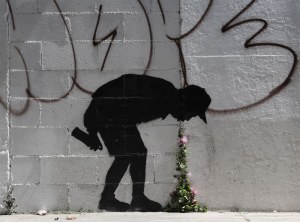
My first draft was my “vomit pass.” Touted by folks like Judd Apatow and Lena Dunham, and encouraged by the structure of marathon writing programs like NaNoWriMo, this is the idea that you just have to get the words down. They don’t have to be good. They don’t even have to make sense. You just have to suppress the urge to edit as you go and get a lot of words on the page. For Rock of Ages, this was about 50,000 words of stream of consciousness writing. I got out stories from my own life as well as some based on family stories and my dad’s poetry. It was definitely a mess, definitely not cohesive, but I still think there were some gems in it. There was emotion in it and it was honest.

Finding a Story

Years later I came back to this jumbled mess and decided to make something of it. I laid each of the stories out on an index card and moved them around until they were in an order that made sense. I filled things in to make a plot–  a string that tied one story to the another. At this point I was pretty convinced I was a genius. When I read authors talk about how bad their early drafts were, I thought I was one of those rare writers with extraordinary natural talent. This book would be a classic, I thought, and I’d already done most of the work on it.

Fixing it Up

Now sufficiently confident, I sent my book out to some beta readers, who responded well. Bolstered by their approval, after another long break (to have some babies), I started doing some line editing. I changed sentences to make them read better and fixed some spelling mistakes. This round was easier, but much less exciting. This is the draft I sent to Inkshares.

The Developmental Rewrite (Vomit Pass Take Two)

My editor had a lot of suggestions, and surprisingly, in spite of my previous big headedness, I was extremely excited about all of them. We worked together to rework the book’s outline, taking out some superfluous plot lines and fleshing out the important stories and characters. I worked ridiculously hard for three months rewriting the book based on this outline, adding description, researching time periods and places. I ended up with a new draft that was almost 40,000 words longer than the one I had sent in. I felt like a badass. Now this was the big hurdle on my way to a finished book, I thought, and I had rocked it. I knew there would be more changes. Maybe I’d have to rewrite a few chapters, hone my prose some more.

So when I talked to my editor a couple days ago and he referenced this as my “vomit draft” my heart sunk for a moment. I had done a vomit draft! Three drafts ago.

I realized though, that in an intensive edit like this, there might be more than one vomit draft. Any time you change so much of the outline, you’ll have to have a round of just getting the words out there.

The Old POV Switcharoo

So now I’m back to step two again– improving the vomit draft. I’m switching from first to third person. I’m overwhelmed by this huge task, but not upset about it. I needed to use first person to get into my characters’ heads and write them authentically and now I need to use third person to improve the prose. I’ll be working on my descriptions, on making them even more authentic for their time periods. I’ll be working to make my book very literary– not just the meanings of the words but the words themselves, their sounds, will invoke the feelings I want to convey. I’m taking it all to another level.

My editor was reassuring when we spoke about this next step. He did the same with his book, he told me, as did other big books he’s worked on. “This is just the process,” he told me.

It’s overwhelming. It’s exhausting. It’s frustrating.

But it’s also incredibly exciting. I’ve seen leaps in my goals along with the leaps in my writing. A few months ago I just wanted to be published. I wanted a few people to read my writing and relate to it. Now I know I can make something really, really special.

With each draft, my imposter syndrome diminishes. I am putting in the work. This process has also shown me the importance of having an editor, and a good one.

If you’re on the fence about hiring someone for a developmental edit of your book, do it.

If you’re in the middle of rounds and rounds of edits, keep it up! The work you are putting in is important and meaningful. It will be worth it.

If you’ve gone through edits like this and come out with a finished book, TELL ME ABOUT IT! Send me motivational quotes! Send me book links!
 

Writing Complex Children: We Need Better Arcs!

There’s something we might be overlooking in our character development as writers.

We all know about character arcs. Characters need to change over the course of a story. When I received my developmental edit letter for Rock of Ages, my editor conveyed that even the jerk boyfriend in my story needed to have more depth, to show an arc. It could go downward, certainly, but he needed to change. Protagonists certainly have to learn or grow or change in some way. In good writing, all of the characters have arcs and end up at least a little different by the end of the book.

But what about the children?

I’m not talking about children’s or young adult books, obviously. So many of those authors are amazing at creating complex characters and showing these characters grow, learn, develop, and change. I’m talking about books written for adults with adults as the main characters but that  have children as supporting characters. It’s hard enough to think of adult fiction that features kids meaningfully, which is strange because there are a lot of kids around us, but it’s even harder to think of examples of adult fiction with kids who show growth and change over the course of the book.

Children in books should not function only as accessories or a plot device. Children are just as complex, have just as much depth, as adults. More importantly, they change a lot faster. Their development happens simply as a matter of time– it doesn’t depend on external circumstances.

So here are some tips for adding complexity to young characters in an adult-centric book.

Read About Child Development 

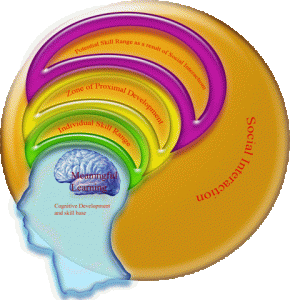
The human brain is amazing and the ways we develop early on are absolutely fascinating! How much time passes in your book? How old is the child in your book at the beginning and how old are they at the end? Do some research! Read about child development at those ages. Demonstrate those changing abilities in your writing. Maybe at the beginning of the book a baby doesn’t understand object permanence and cries whenever her mother leaves the room but by the end, she understands she’ll return shortly. Maybe a child who doesn’t grasp the difference between fantasy and reality is starting to comprehend this by the end.

Talk to a Kid

If you’re writing about a child but haven’t spent much time with one their age, see if you know one you can visit or speak to on the phone. Take note of their mannerisms, pronunciations, and sentence structure. 

Let Them Surprise You

Kids in books can do things that would be more out of character for adults because they are changing constantly. Just because a child in a book sleeps with the lights on every night for the first half of the story doesn’t mean they can’t suddenly decide to turn them off. A five year old who is outgoing may become a five and a half year old who is more reserved. I’m not saying to make your young character do whatever you want. They should have a personality and mannerisims and tendencies, but they can diverge from those more easily than you could get away with with an adult character. You can have the adults around them react with surprise, astonishment, or reflection to highlight this difference.

Read Good Kids

Get inspired by books with good young characters. This may mean reading children’s, middle grade, or young adult books, but try to find adult-centric books as well. I recently read Sing, Unburied, Sing by Jesmyn Ward and was impressed with the character Kayla (or Michaela, depending on who you ask.)

Oskar of Extremely Loud and Incredibly Close is a fantastic character, though this book is a little different since he’s the protagonist. Jonathan Safran Foer does this well in another of his books, Here I Am, too, in which the kids are secondary characters but still complex.

I have a hard time thinking of other good examples, which might show what a gap there is. What have you read with good kid characters?

What’s In a Word Count?

Writers I know tend to obsess about their word counts– daily, weekly, monthly, as well as the word count of their manuscripts.

I don’t think other creative people do this in quite the same way. When I was a dancer, we didn’t sit around in the dressing room saying things like “I practiced four different pieces today!” In jazz band, there was no sense of competition regarding how many songs we rehearsed.

Sure, in both of these examples, we’d compare time and battle scars. “We rehearsed for four hours straight yesterday. Check out this blister,” was definitely heard. But there’s a difference between talking about time invested, signs of your commitment to your art, and to obsessing about output. I think writers are unique this way.

In a way it makes sense because it’s just easier to measure with writing. Word count is tangible, measurable, and it’s reinforced by hearing well-known authors discuss their daily word count. There’s also a difference in that the act of writing is how we practice and get better. Focusing on a numeric goal can be a good way to just get some words on the page and get out of your head about getting them perfect. The word count goal of NaNoWriMo is what motivated me to write my first draft! So there’s definitely something to be said for getting your words in.

I read this article recently, which highlights the daily writing routine and average output of some famous authors. The norm seems to be 500-3000 words a day, with many saying 1000.

Tom Wolfe, notably, says he averages 135 words a day, and Michael Crichton produces a whopping 10,000, but none of the others were too surprising. As I rewrite Rock of Ages, I’ve been averaging 1000-2000 words a day, and it was kind of cool to learn that this is on par with a lot of professional authors. What I realized, though, when I read about their routines, is that many of them noted writing from morning to evening, or at least for several hours. I get my one to two thousand in an hour or two! Maybe if I was actually writing as a full time job, I’d have 10,000 words a day too!

I’m currently taking the Margararet Atwood writing course at Masterclass.com, and in one lesson she stresses that for most writers these days, especially if we aren’t rich men with someone watching our children and bringing us our meals, our writing time is charactertized by interruptions. Unless you are able to devote the bulk of your day to your craft, it’s important not to compare your routines to people who can. If you’re whipping out 500- 1,000 words a day and taking care of children or doing another job, or really, anything else, you’re doing a fantastic job! And if you aren’t, think of Tom Wolfe!
It’s important, too, I think, to bring some of the attitude of other creative pursuits to writing and remember that, though working to write every day is important for improving, it isn’t all about numbers. Would you rather write 100 mediocre books or one really wonderful one? Nobody is going to the concerts of a musician who plays tons of songs badly. So prioritize your writing time. Set word count goals if they’re helpful. Get those words on the page and keep working at it. But also, be kind to yourself, be realistic, and remember your passion about what you’re writing, too.

How many words do you write a day? What does your writing routine look like? Are word count goals helpful for you?

Before and After: Developmental Edits

Before funding Rock of Ages, I was mostly ignorant of the editing process a book goes through before reaching shelves. When I thought of editing I thought of line editing and copyediting– going line by line marking misspellings and grammar mistakes, maybe providing some insight about characters and plots in a note at the end, but mostly correcting mistakes. There’s a whole other step, I learned quickly. The developmental edit.

This broad level edit looks at the story as a whole, making suggestions sometimes as sweeping as dropping or adding characters and chapters or whole subplots. Settings change, sometimes tense and point of view.

My own developmental edit letter was thrilling, which is not how I expected it to feel. In spite of huge suggestions (work really hard on my descriptive prose, drop several subplots, change the setting for parts of my story, age down my characters, etc.), I was so excited about my editor’s vision and could really tell they would improve my book immensely.

It’s been a challenge explaining to my supporters how I can be making such huge changes to the manuscript while still delivering them the book they signed up for. So here’s a before and after example that I hope will make this a little clearer, as well as provide authors who are nervous about their developmental edit some assurance that though it is a lot of work, your book will still be your own, just better!

A warning that there are some minor spoilers for Rock of Ages below, but none that should greatly affect your reading of the book.

Before:

“Becca,” Simon said, turning his gaze back to me.
“Yeah?” I asked.
“I love you.”
“I love you, too. Thank you for always being there for me. I really needed this.”
“I’m…in love with you,”  he said, hugging his the sleeves of his red flannel shirt, too warm for the 80 degree weather. “I always have been.”
“Simon,” I started.
“I would be so good to you,” he said.
“I know,” I said. We were silent. We looked at our drinks, Simon’s almost gone and mine still full.

After:

“Cass,” Simon started, and then pushed himself up to seated, staring over at the far bank, thoughtful. I watched him, lifting one arm to shield my face from the sun, which had emerged from behind a fluffy cumulous cloud.
Simon sighed.
Is he going to lecture me? I wondered. It didn’t seem like him, but I had no idea what else he could be saying.
“Cass, I’ve been in love with you for a long time,” he finally blurted. I propped myself on my elbows and let him continue.
“I know this probably isn’t the time to tell you this. I know.”
I sat up all the way now, listening.
“Cass, I would be so good to you,” he finished.
“Simon,” I started, not sure how to respond. I had never even felt a hint of romance with Simon. We had always been more like siblings than anything else, but here with him now, hearing this, I noticed for the first time how handsome he was. How he had lost the chubby cheeks that had made him look so much younger than he was for so long and was now lean and muscular from working in the gardens. I thought about his compassion and loyalty, caring for his family, how steadfast and dependable he had always been. He was so familiar, so safe, but at the same time there was something new and intriguing about him. He had changed since I’d been here last— he was more confident and determined, and I had to admit when I tried to see him from an outsider’s eyes, from the point of view of someone who was just meeting him now, for the first time, he was attractive, all of those things together were attractive.
You should kiss him, I told myself. And I almost did it. I almost leaned in and kissed him. It would have been like a movie— I could see it playing in my mind.
“Simon,” I said again, and his face perked, reminding me of a puppy. But that was it— I couldn’t see him from an outsider’s perspective. He would always be the kid I grew up with, regardless of who he was now. And he was always a part of here, of Buckhannon. And the weight of Buckhannon, of all of it, of my dad and my grandma and my mom’s dumb marriage, how she said she never loved my dad, and the drownings and the mine disaster and the little girl at the health clinic and the mom at Wal-Mart and Simon’s mom and brother and my fight with Tim and just all of it. Buckhannon was more than a place now— it was a weight, pressing down on me with all the heaviness of all of those awful things. And I wasn’t really sure, like Grandma had insisted I needed to be. And if I wasn’t really sure, if I didn’t get out now, I knew I never would. I thought of my job at Pow!, of LA, of good vegan food and blending into a crowd. I had a week left of family leave before I would have to tell Karen I wasn’t coming back to the office.
“I’m sorry, Simon,” I said, my face crumpling. “I think I have to go back to LA.”
His face mirrored mine, his eyes creasing at the corners and his lips turning down, but he nodded, holding his tears at bay, and lay back down on the rock. I lay next to him and grabbed his hand. Together, we watched the clouds for a long, long time.


In the first excerpt, I relied on the dialogue to convey all the things I said explicitly in the second excerpt. There are changes to the setting, additional descriptive prose, and more developed characters. You’ll also notice that I had to rewrite the passage mostly from scratch, but I hope this example shows how I can be rewriting most of the book while still keeping the heart of it! If you’re nervous about a developmental edit, I hope this makes you more excited! If your editor is good, you’re in for a lot of work but a book that is still yours, just a lot better!

Have any of your projects gone through a developmental edit? What was the process like for you?

Motivation, Accountability, and Bribery: How I Get My Writing Done

I’ve always been a responsible person. I was a conscientious student from preschool, completing extra worksheets at home with my mom just because I wanted to. This personality train persists today, and is essential for my success as a writer. After all, no one is telling me I have to write a blog post each week other than me. No one has set any deadlines for the rewrite of my novel. It would be next to impossible to write without some amount of self-directed motivation and accountability, and though these seem to come naturally to me, I know they’re really hard for some people. I decided to intentionally consider the roots of these habits and how I cultivate them.

Motivation

At the heart of all of it, is motivation. If you don’t know why you’re writing, you won’t keep writing. For me, it’s a few things: Stories come up from somewhere inside me and I can’t think about anything else until I get them out. The stories need to be told. I want to be recognized as a writer– to have people read my work and be moved, to feel like it speaks to them. I want to hold my own books in my hands. And of course, now that people are waiting for my book, the desire not to disappoint them is a motivator too. If you don’t know why you write or paint or study, or do whatever it is you’re trying to do more of, spend some time thinking about it. Verbalize it. Imagine it. Really let yourself picture what it would feel like to achieve it. Studies show our brains respond the same way to things that are vividly imagined as they do to things we really experience. Get used to the feeling, so that it really feels possible, and come back to it any time your motivation is low.

Accountability

I give myself deadlines and I treat them like external deadlines. I only let myself compromise on them in rare circumstances. Writing down goals is essential for me. I write “write” in my planner every day and cross it off when I meet my goal. If something comes up and I don’t get to my 1000 word goal in the morning like I planned, I stay up that night until I do, even though I’m the only one checking. Investing in yourself requires holding yourself accountable. Don’t give yourself excuses. That being said, make sure your goals are reasonable. They should be challenging yet realistic. If it’s a struggle to meet them every day, they’re too difficult. If you’re meeting them easily every day, they aren’t hard enough.

If you really struggle with keeping internal deadlines, make them external. Sign up for NaNoWriMo or 750Words. Get a writing buddy and check in with each other.

Bribery

Don’t be afraid to bribe yourself. Before I started the rewrite for Rock of Ages, I made a list of milestones in the book and how I would treat myself when I reached them. Everything from coffee at your favorite place to bigger gifts can do the trick.

Is self-directed work hard for you? How  do you keep yourself motivated and accountable? What would you do if you could just make yourself do it? 


Nature as Birthright

We returned yesterday from our annual trip to West Virginia, and though it’s nice to come home– to my own bed, to my own kitchen, to my own routine, it’s always sad to leave some things in the Mountain State behind. This trip was particularly wonderful. I spent lots of time with my Grandma, saw several friends and family members, documented part of the trip for the Travelin’ Appalachians Revue Instagram, found some great primary sources for my novel, and learned a lot about my hometown from the local historical society. For my children, it was wonderful because of the time they spent outside.

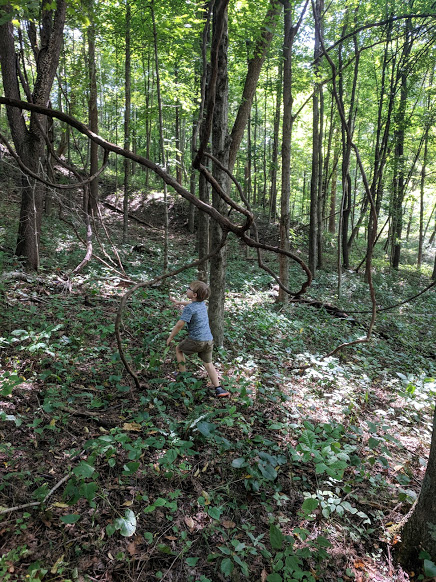
I’ve heard a lot about “Nature Deficit Disorder,” a term coined by Richard Louv in his book Last Child in the Woods. In my training as a Tinkergarten leader, I learned something jarring– children in my generation spent an average of 30 minutes outside per day (even this seems shockingly low to me). Children now spend an average of nine. My children spend time in our yard and in parks. We go on hikes. But there is something totally different about just being in the real, undeveloped, unmanicured, untamed wilderness– of having time to explore and take risks and discover. And watching my children do those things in the same place that I did as a child was so moving. It’s their birthright, I realized. To climb vines and throw sticks on this same piece of land that their mom and their grandpa did.

Of course this gets into issues of land appropriation from native people. My part of West Virginia belonged to the Mound People first, and then to other native tribes. A book published in 1907 about my county’s history claims that these tribes actually left before it was resettled by white settlers, which does make me feel a little better if it’s true, but I still want to be clear that I don’t believe in manifest destiny when I talk about a birthright. Rather, it’s everyone’s birthright to spend time in the wild, particularly in the place where their ancestors did the same. In fact, that’s part of why the theft of homeland is such an atrocity. Land and home and place are such a part of us– integrated into our consciousness and DNA the same way trauma can be. If I visited the village in the Ukraine where some of my ancestors lived, I think a part of me would recognize it, would sing “Yes! This place is a part of you.” I think it’s why so many people feel that draw– to return to their ancestral lands.

So we’ll keep going back, keep intentionally giving them this time, this place.

Did you have unstructured play in the wilderness as a kid? What did you learn? How do you feel about it now?

Farmhouse Chic: The Rising Trendiness of an Appalachian Aesthetic

Can we talk about appropriation of Appalachian culture for a minute?
Specifically the whole “farmhouse” look as like, a thing. I saw a metal sign in Target the other day that said “Farmhouse.” I don’t think there’s anything inherently wrong with using “farmhouse” as inspiration for a home (and there’s obviously nothing wrong with it if you actually live on a farm). I actually think the look is really beautiful. But I imagine we can all agree that giving money to a big store for a mass produced generic piece meant to imitate the look is literally textbook appropriation, especially if you’re not doing anything to support the regions where the look originates and especially especially if your politics are some of those which keep those regions poor.

I also kind of laugh, thinking about the actual farmhouses I grew up in. I wonder how some of the people who just know the look from Pinterest would feel about the raccoon that made its way into our dryer one time.

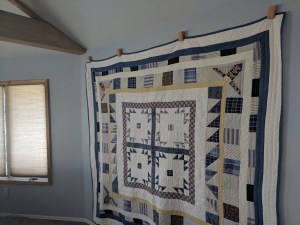
My new home is definitely not on a farm here in SoCal, though I am super excited that we have a bunch of fruit trees and raised beds ready to go, but the interior so far is pretty much just a shrine to West Virginia. It’s all from independent artists or my relatives and friends. The quilt was a wedding gift from a cousin, a combination of chicken feedsacks, my dad’s old shirts, and a quilt top my great grandma pieced. It’s a bear claw pattern for WV.

I’m not trying to be all “more authentic than thou” about it, though I know it might sound that way. I’ll admit it feels kind of nice that I get to be kind of trendy when I’m really just obsessed with my origin story.

I just really can’t wrap my head around paying money to people who pereptuate the exploitation of Appalachia to look like your house is some sterile version of one in Appalachia. If I’m being honest with myself, it bothers me that people might think they can have the beautiful parts of our culture without having, or knowing anything about, the hard parts.

A friend pointed out that the trend may at least give people an appreciation for their own heirlooms and for craftsmanship, and I see her point. Things can be good in some ways and bad in others.

Decorate your home in the way that brings you joy, but please, if your look is inspired by a culture you don’t come from, do your best to learn about and support the people from that culture in whatever way you can.

What do you think? Anyone else try to ease homesickness by surrounding themselves with things from home? What are your feelings about the rise of farmhouse chic?

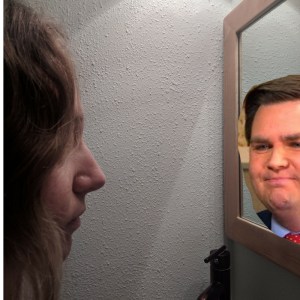
The Monster in the Mirror: Appalachian Imposter Syndrome and Appropriating My Own Culture

I have to admit that what makes me the most uncomfortable in the debate about JD Vance and Hillbilly Elegy is the fear that I am like him.

Vance is racist, claiming he is “skeptical” of the idea of white privilege. The website for his nonprofit, Our Ohio Renewal, blames the breakup of families for a host of problems rather than the other way around. The championing of his story perpetuates the idea that a person, a poor Appalachian person specifically, can pull themselves up by the bootstraps—an idea that is precisely the opposite of what  those outside the region who are suddenly so interested in Appalachia, need to hear.

It struck me that Vance is engaging in a sort of cultural appropriation, though of his own culture, in using the story of Appalachian poverty to advance his own name, political career, and wealth, without giving back much of what he gains. But my fear starts here—he may genuinely think that he is giving back, that Our Ohio Renewal and his own political ambitions are truly what the region needs. He’s not trying to be the bad guy.

What does that make me? To quote Clare Dederer out of context, “Are all ambitious artists monsters? Tiny voice: [Am I a monster?].”

I, too, left Appalachia. It was never a question for me that I would leave. Though I loved the hills, the green, the sweet sap from our sugar maples, I knew by the time I was 10 that West Virginia was the place of my childhood, of my roots, but not where I would stay. And now, two decades later, I’ve written a book. People are listening to what I have to say. I might make some money.

I feel like an imposter when I describe myself as an Appalachian author. Others who claim that title still live there. They stayed. I feel guilt when I think of my friends who stayed, who are creating art and organic farms, protesting, sticking rainbow stickers on the windows of their businesses. They’re doing the work. Meanwhile I skipped town and still get to write about it.

Do I even get to call myself a West Virginian? I wonder almost daily.

And then there’s a microaggression.

“Where are you from?” someone will ask.

“West Virginia,” I’ll say.

The answer varies.

Sometimes it’s, “Wowww,” with a smirk, as if we’re both in on a joke.

I don’t laugh.

Sometimes it’s, “But you don’t have an accent.”

I wonder what they would think if they heard the codeswitching I do when I go home.

Sometimes it’s the classic— “Oh, near Roanoke?”

The rage I feel confirms that yes, I am a West Virginian.

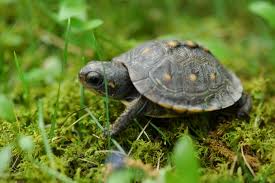
Gloria Anzaldúa writes, “I feel particularly free to rebel and to rail against my culture. I fear no betrayal on my part, because… I was totally absorbed in mine…. In leaving home I did not lose touch with my origins because lo mexicano is in my system. I am a turtle, wherever I go, I carry ‘home’ on my back.”

Like Anzaldúa, my home, my culture is in my blood. I carry West Virginia with me everywhere. When I write the parts that are ugly, I write it as if I were writing about my self. But Vance thinks this too.

Saying that ignores a lot, though. It ignores the fact that even in Appalachia, Vance was still a white man. Though he certainly faced the hardships of poverty and familial addiction, when he left—when he did overcome those (and good for him for doing so!), he got to be a white man. He can imagine that the problems of poverty and addiction are self-imposed because when he left Appalachia, the privileges he did have allowed him to leave poverty and addiction behind.

In my Appalachian childhood, I was a Jewish girl. Though the intersectionality of my identities did not make things as hard for me as it did for my black peers, I was still told regularly to my face that I would go to hell. I was harassed on the school bus. I was sexually assaulted.

I won’t gloss over my own privilege. My own white skin and access to education allowed me to climb the social and economic ladder when I left the region too. But the intricacies of my identity have led me to think critically about the roots of issues (spoiler alert: the good ol’ capitalism/patriarchy mashup), rather than blame the people I grew up with for them.

Anzaldúa says, “So yes, though ‘home’ permeates every sinew and cartilage in my body, I too am afraid of going home. Though I’ll defend my… culture when they are attacked…I abhor some of my culture’s ways.” The ugly parts I share as if I own them, yes, but I try consciously to make it clear that those ugly parts result from the fists of capitalism that have grabbed at our hills for so many decades. Though I may recall the effects they have had on me, I will not blame them on my neighbors.

And what about the beauty? Isn’t that what appropriation usually is? Taking the things that are beautiful and profiting from them, without giving back to those you took it from? Because really, most of my writing about Appalachia is a love letter.

It’s not as simple as “giving back,” Vance has shown me. I will have to give back correctly—making sure, as I do in my writing not to do so in a way that blames Appalachia for its poverty and all that stems from it. I will be intentional with my financial contributions, supporting organizations, candidates, authors, and artists who advocate for the region in meaningful ways. I will be intentional with my words, remembering and portraying the agency, the grit, and the resistance so emblematic of my home among the hills.

If you liked this post, please consider signing up for my newsletter, which features links to weekly blog posts and news about my book and events!


A Year of Uke: Lessons from 365 Days of Strumming and Humming

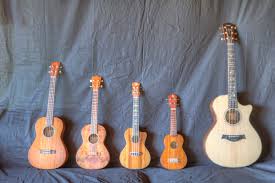
I received my ukulele for my birthday last year, which means I’ve been playing for about a year now. In that time I’ve gone from strumming my first simple chords to fingerpicking some pretty complex melodies. A year with the ukulele has taught me more than some songs, though. It’s changed the way I think about music and myself.

People Can (And Will) Be Sexist About Anything

It doesn’t take much Googling ukulele stuff to find people talking condescendingly about the young women who have happily adopted the uke as their instrument of choice and perform fun covers on YouTube, making fun of them for being cute and quirky, and subsequently dismissing the ukulele as a serious instrument. I occasionally find myself embarrassed when telling people that I play the ukulele, not wanting to be lumped in with what is seen as some cutesy trend.

To anyone who has engaged in this crap, I’ll say a few things:

  1. It’s pretty fun to be cute and quirky. Don’t knock it until you’ve tried it.
  2. You’re being sexist. “Quirky is a thinly disguised usually-gendered complement-insult. It’s used as a way to simultaneously be attracted to someone and patronize them.
  3. You’re being sexist. Dismissing women for doing “easy” things is bullshit. You can pick up on the basics of uke quickly, it’s true, but many of the women sharing videos are incredibly talented.
  4. You’re being sexist. After learning a few basic chords, playing the ukulele is at least as complicated as playing power chords on a guitar, and I don’t see nearly as much genderized critique of the punk bros doing that.
  5.  You’re being sexist. Dismissing a whole instrument because it’s seen as being associated with a certain gender just shows how rigid you are about stupid gender roles. Get over it. Or don’t. You’re missing out.

Annnnnyway. Moving on from my rant.

There Doesn’t Have to Be An Endgame

When I played instruments as a teenager, it was always about getting somewhere. Perfecting the solo for jazz band. Forming a band with friends and playing shows. It was always about playing for other people. Maybe it’s just the difference between being a teenager and being an adult, but I practice the ukulele for its own sake now. It’s like I finally get the inherent value of making music, which has helped me understand the advice I’ve read about writing for writing’s sake more deeply. If I play for or with other people now, it’s to enjoy it in the moment. I like learning hard songs just for the satisfaction of it, not because I plan to put on a show or become a YouTube sensation. It’s pretty cool to have a hobby that I enjoy just because it’s fun and it makes me strive for that with writing and my other interests too.

It’s All About Family

I got into ukulele because my mom and stepdad started playing and they were having such a good time with it. Now, when they visit, playing with them is the best! It’s so great sharing a passion with my mom, talking about what we’re working on, sending each other chords for songs. I’ve got the kids in on it too, and it’s amazing when they jam with me on shakers and kazoos! Playing music as a family is seriously one of the best things I can imagine.

This next year, I’d like to play uke at a strum. I’m sure the energy of playing with a group of people is fantastic. I plan on working more on my fingerpicking and on my ability to improvise. This instrument has brought me closer to the joy of music for music’s sake and I’m so thankful.

Do you play an instrument? What does it mean to you? Tell me in the comments!


To S’Mores!

S’mores.

Summer.

Summer.

S’mores.

The words even sound kind of alike, at least if you pronounce the food the way I do, as if it weren’t a contraction: Suh-mores. Some mores. My husband laughs when I say it, insisting it’s “smoores” all squished together.

However you pronounce them, s’mores and summer are inextricable. I love everything about the treat– the whole process. I love holding the stick over the flame, waiting patiently for golden brown. I was never one to burn my marshmallow on purpose. No way.

I love moving clockwise around the campfire to avoid getting smoke in my eyes. “Smoke follows beauty,”  someone said once when I was a kid, and I took it to heart, feeling a tiny smugness when I again had to squint, believing, like kids who are told constantly that they are beautiful and wonderful do, that there was something unique and special about me, something so inherent that even the elements couldn’t deny it.

I love the way the chocolate melts when the marshmallow touches it and the way the grahm cracker breaks, crumbling in your hand or on the plate as you take a bite, the crunch contrasting with the chewiness and the gooey goodness. All of it. It’s all so fun and delicious and so a part of my favorite season that making s’mores has become almost a sacred ritual. So when I learned Trader Joe’s has vegan marshmallows, I was pretty excited.

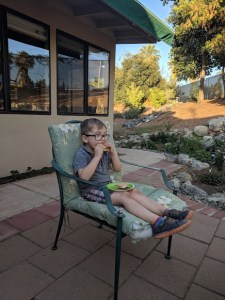
Making s’mores with my kids is the best, as is doing anything with them that I loved to do as a kid. We went to a party when I was little. The kids were in the woods roasting marshmallows and the adults were somewhere else and I felt very grownup being allowed to stay with the big kids for this ritual. Before walking away, my mom told me I could have three marshmallows. I remember so vividly the miscounting I did that night– one of my first and only memories of being truly sneaky. “One,” I would say to myself after three or four marshmallows. “Two,” I’d say after a few more. The funny part is that I bothered counting. Instead of just breaking the rules, I had to lie to myself. I was already very much me.

It makes me wonder, too, about my children– their personalities, their inner worlds and monologues. What are they saying to themselves? It makes me think too, about the differences in our childhoods. How old was I at this party in the woods? How far was the campfire from the adults? Am I misremembering the sense of independence because I was so little or was I really out in the woods by a fire without any adults nearby? This article has been making the rounds in my circles this week, and it makes me think again, as I do pretty regularly, about parenting right now, in this place and time. Would I let my kids roast marshmallows with older kids out of my sight? How old would they have to be? Is my hesitation about this a sign of different childhood settings, different times, or some combination of those?

It isn’t about them eating too many marshmallows, I’m fairly certain, so for now, I will give them s’mores. Some more. Some more s’mores.

How do you pronounce s’mores? Do you have any memories of being sneaky as a little kid? Tell me about them in the comments!